If you smell gas right now, stop reading and act. Leave the building immediately. Do not flip any light switches, do not use your phone or a lighter inside, do not turn any appliance on or off. Once you're safely outside and away from the building, call 911 or your gas utility's emergency line. They are the ones equipped to make the situation safe, shut off gas at the meter if needed, and confirm it's clear before anyone goes back inside.
A plumber's role comes after that. Once the utility or emergency responders have made the property safe, a plumber who works on gas lines handles finding and repairing the actual leak in your line, along with the pressure test that confirms the fix holds before gas service is restored. Call (831) 300-2203 once you're past the immediate safety step and ready to get the line repaired in your Sullivans Island, SC home.
Signs Of A Gas Leak
The most recognizable sign is smell, natural gas itself is odorless, but utilities add mercaptan, a chemical with a distinct rotten-egg odor, specifically so leaks are noticeable. Beyond smell, watch for a hissing or whistling sound near a gas line, appliance, or meter, dead or dying vegetation in an otherwise healthy area near a buried gas line, bubbles appearing in standing water or wet ground above a buried line, and physical symptoms like headache, dizziness, or nausea that improve when you leave the house and return when you're back inside, which can point to a slow leak affecting indoor air.
If you notice any of these, treat it the same as smelling gas directly: leave, don't operate anything electrical, and call from outside.
Why Gas Lines Leak
Older gas lines were often run in black iron pipe, which is durable but can corrode at joints over decades, especially in older homes. Some homes have CSST (corrugated stainless steel tubing), which is more flexible to install but requires proper bonding and grounding, improperly installed or bonded CSST has been linked to damage from nearby lightning strikes in some documented cases. Physical damage is another common cause: a buried line struck during digging or landscaping work, a line that shifted from ground settling, or a fitting that loosened from vibration over years.
Corrosion at threaded connections, especially where the pipe passes through soil or a damp area, is a frequent failure point on older systems. Appliance connectors, the flexible lines running to a stove, dryer, or water heater, can also degrade or get damaged and are a common, easier-to-fix source of a leak.
What A Plumber Who Works On Gas Lines Actually Does
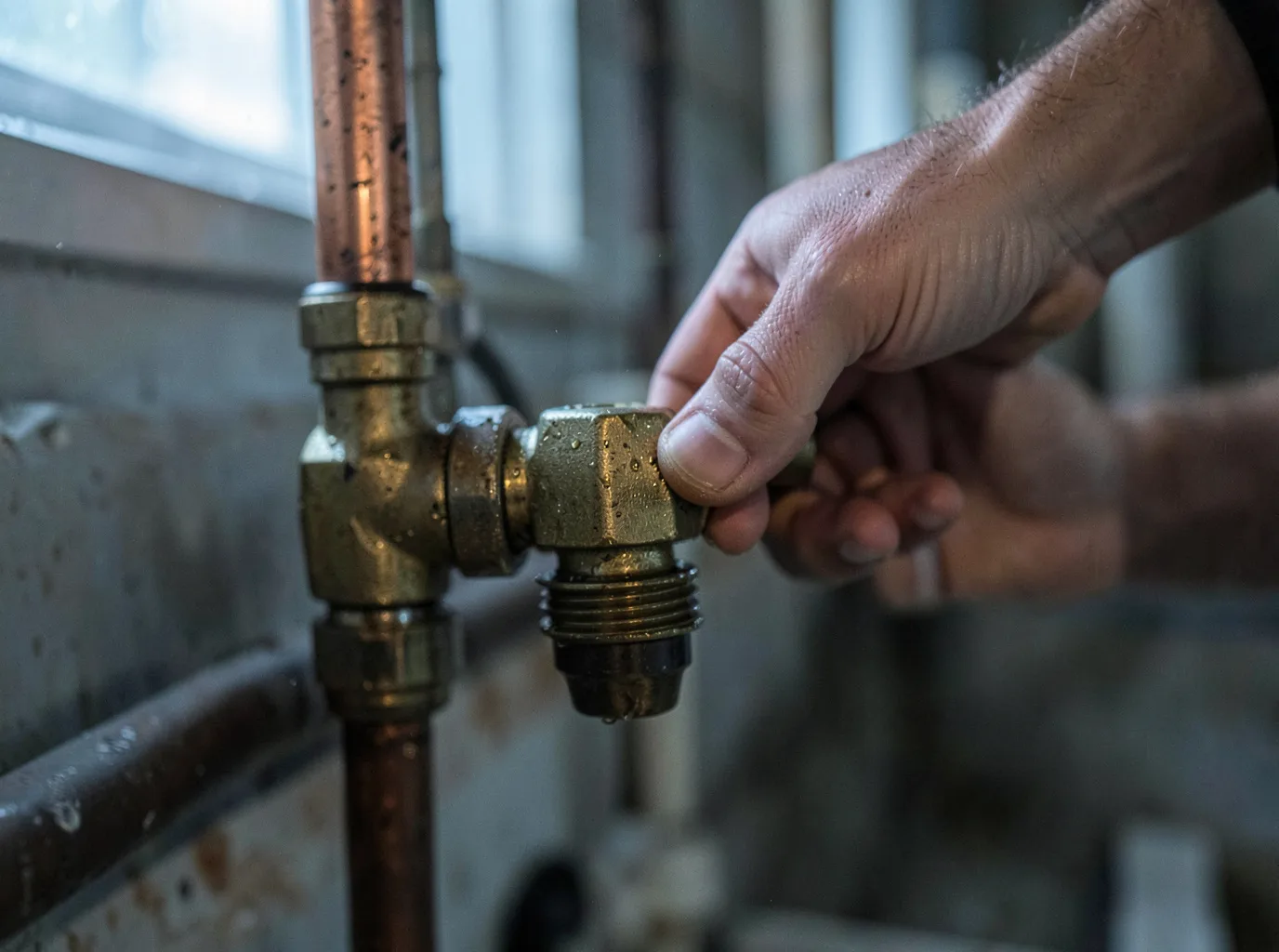
After the utility has confirmed the property is safe, and only then, a plumber's job is to locate the exact source of the leak and repair it. This usually starts with a gas pressure test: pressurizing the line to a specified level and monitoring whether it holds steady or drops, a drop confirms a leak is present and roughly how significant it is. From there, the plumber traces the line section by section, checking accessible joints, fittings, and appliance connections, sometimes using a gas leak detector that senses even small concentrations in the air near a suspected joint, until they isolate the exact point.
Repair depends on where the leak is found. A failing appliance connector is a straightforward swap. A corroded joint in black iron pipe usually means cutting out and replacing that section with new pipe and fittings, threaded and sealed properly. A damaged section of buried line typically needs to be exposed (dug up) and replaced, sometimes with an updated run of new pipe or CSST. After any repair, the plumber runs the pressure test again to confirm the fix holds before anyone reconnects gas to appliances or the utility restores service.
Plumbers working on gas lines also check the gas shut-off valve itself, both the main valve at the meter and any appliance-level shutoffs, to confirm they're functioning correctly, since a valve that doesn't fully close is its own safety issue separate from the leak.
What Affects The Price
How accessible the leak is (an appliance connector versus a buried line requiring excavation), how much pipe needs replacing, and whether black iron or CSST is involved all factor into what the job costs. The plumber prices it after the pressure test confirms the leak's location and scope, not as a guess over the phone.
Before The Plumber Arrives
If you're already safely outside and the utility has been called or has responded:
- Do not go back inside until the utility or emergency responders confirm it's safe
- Do not attempt to locate or fix the leak yourself, even a small adjustment to a fitting can make things worse
- If pets are inside and it's not safe to go back for them, let responders know
- Once cleared to return, avoid using any gas appliances until the plumber has completed the repair and pressure test
- Keep the area around your gas meter accessible for both the utility and the plumber
In many places, gas line work needs a plumber who specifically works on gas lines rather than general plumbing repairs, this isn't the same scope as fixing a leaky faucet, so it helps to say clearly when you call that this is a gas line issue.
Why Call This Line
We connect you with a plumber working in Sullivans Island, SC who handles gas line repair once the utility has cleared the property as safe, and you can reach that line at (831) 300-2203. We're a referral service, we're not on site and we don't perform the repair ourselves, but we can get you talking to someone who does this specific work without you searching through general listings during a stressful moment. The line is answered around the clock. If you also have a related plumbing issue once the gas work is done, like a water leak detection check on the same line trench or a burst pipe repair elsewhere in the house, the same call can route you to a plumber for that too.
Questions people ask about gas line leak repair
What should I do the moment I smell gas? Leave the building immediately without touching any light switches, phones, or appliances inside. Once you're outside and at a safe distance, call 911 or your gas utility's emergency line. They will assess the situation and make it safe. Do not go back inside until they tell you it's clear.
Does a plumber fix a gas leak, or does the gas company? Both play a role, but at different points. The gas utility or emergency responders handle making the immediate situation safe, often shutting off gas at the meter. A plumber who works on gas lines then locates the source of the leak in your line, makes the repair, and performs a pressure test to confirm it holds before service is restored.
How does a gas line pressure test work? The plumber pressurizes the line to a set level using a gauge and monitors it over a period of time. If the pressure holds steady, the line is sealed. If it drops, that confirms a leak somewhere in the system, and the size of the drop can help indicate how significant the leak is before the plumber starts tracing it section by section.
Where is my gas shut-off valve, and should I turn it off myself? Most homes have a main shut-off valve near the gas meter, usually a lever that turns a quarter turn to shut off flow. If you smell gas, prioritize leaving the building over trying to locate and operate the valve yourself, especially since operating anything near an active leak carries risk. Let the utility or a qualified plumber handle it once you're safely outside.
Is it normal for a gas line to need a plumber who works on gas lines specifically, not just any plumber? In many places, yes. Gas line work is a distinct scope from general plumbing repair, and it's worth mentioning specifically that your issue is a gas line when you call, so you get connected with someone who handles this type of repair.
If you smell gas, leave the property now and call 911 or your gas utility from outside. Once the area is confirmed safe and you need the actual line repaired in Sullivans Island, SC, call (831) 300-2203 to get connected with a plumber who works on gas lines.